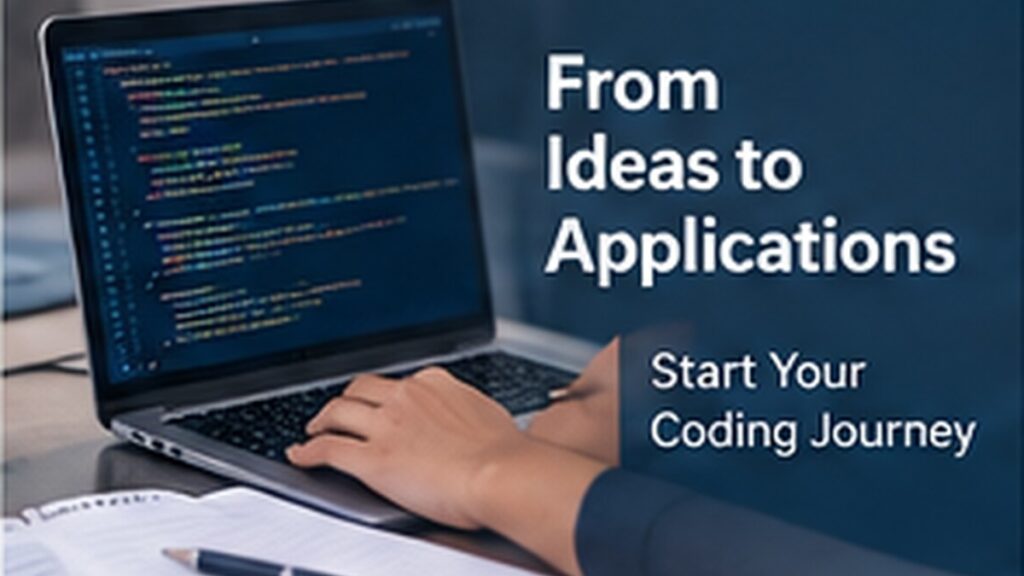
Programming can look difficult because beginners often see completed applications before they see the small ideas behind them. The easiest way to start is to learn a few core concepts, practise them repeatedly and build tiny programs before attempting large projects.
This guide is written for students, parents and teachers who want practical, realistic information rather than a list of buzzwords. Use it as a starting point, adapt it to the student’s age and interests, and focus on completing small projects properly instead of trying to do everything at once.
Step 1: choose one language
Python is a friendly first language for automation, data and general programming. C is excellent for understanding programming fundamentals and memory more closely. JavaScript is a strong choice for students motivated by web pages and interactive interfaces.
The exact first language matters less than staying with it long enough to understand the common concepts.
- Python: general programming, automation, data
- C: strong foundations and low-level concepts
- JavaScript: websites and browser applications
Step 2: learn the small building blocks
Do not rush directly into frameworks. Learn variables, input/output, conditions, loops, functions and collections. Write several tiny programs for each concept.
- Variables and types
- if/else
- for and while loops
- functions
- lists/arrays
- basic error handling
Step 3: practise debugging
Beginners sometimes think good programmers do not make errors. In reality, programmers spend a lot of time finding and fixing them.
Read the error message, locate the line, print intermediate values and reduce the problem to the smallest failing example.
- Syntax errors
- wrong values
- incorrect conditions
- off-by-one loop errors
- missing input validation
Step 4: build mini projects
Projects give a reason to combine several concepts. Start with something small enough to complete in a few sessions.
- Number guessing game
- quiz application
- expense tracker
- student marks calculator
- file organiser
- simple to-do list
Step 5: learn Git and basic project organisation
Version control is useful even for beginners. Git helps students save meaningful checkpoints and understand how professional code projects are managed.
Also learn to organise files, write a short README and name variables clearly.
- git init
- commits
- GitHub repository
- README
- simple folder structure
Step 6: move into a direction you enjoy
After the fundamentals, choose a path such as web development, data analysis, mobile apps, AI, cloud or embedded systems. The foundation will transfer.
A four-week beginner programming plan
- Week 1: variables, input/output, conditions and 15–20 tiny exercises.
- Week 2: loops, functions and another set of exercises.
- Week 3: lists/arrays, strings, files and debugging practice.
- Week 4: complete one mini project, document it and explain it to someone.
Common mistakes to avoid
- Watching tutorials without typing the code yourself
- Changing languages whenever a topic becomes difficult
- Copying large solutions before attempting the problem
- Trying a complex framework before understanding functions and data
- Ignoring error messages and randomly changing code
Frequently asked questions
How many hours a day should a beginner practise?
Consistency matters more than very long sessions. Even 30–60 focused minutes on most days can produce strong progress.
Should I learn Python or C first?
Choose Python for a gentler start and broad application, or C if your priority is strong foundational understanding. Both can be excellent first languages.
When should I start projects?
Very early. A tiny project after learning conditions and loops helps turn isolated concepts into practical understanding.
Do I need mathematics for programming?
Basic logical thinking is enough for many beginner programs. More mathematics becomes important for certain areas such as machine learning, graphics or scientific computing.
Final thoughts
Learn one concept, type code, make mistakes, fix them and build something small. That cycle is the core of programming education and remains useful even when you later work with advanced frameworks or AI coding tools.
Madras Academy tip: keep a simple project notebook or digital portfolio with photos, diagrams, code links, test results and what you learned. A small project that you can explain confidently is far more valuable than a large project you do not understand.