Sustainability projects are strongest when students can measure a problem, build or test a small solution and compare the result. A model should connect to a real behaviour or environmental issue rather than remain only a decorative display.
This guide focuses on practical learning: understand the idea, try a small version, test it, document what happens and improve it. That approach is more useful for students than collecting isolated facts without applying them.
1. Classroom energy audit
Record when lights, fans, projectors and computers are used unnecessarily. Compare usage before and after a shutdown routine.
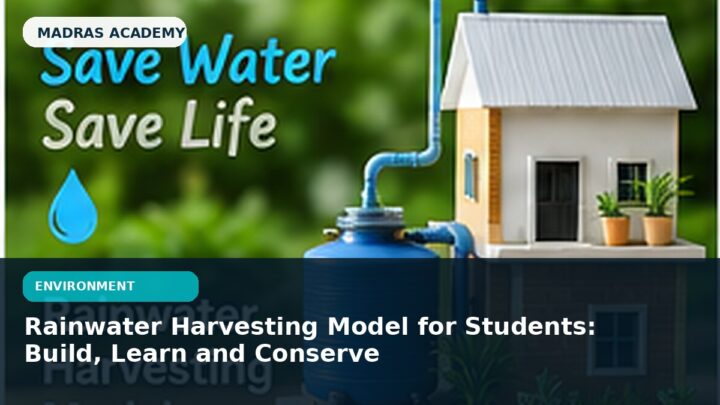
2. Rainwater-harvesting model
Build a roof, gutter, first-flush path, filter and storage tank. Explain where collected water could and could not be used.
3. Smart irrigation prototype
Use a soil-moisture sensor and mini pump to water a plant only when the soil becomes dry.
4. Waste-segregation study
Create labelled bins and measure how accurately waste is sorted over a week.
5. Compost observation project
Track organic waste, moisture and decomposition changes over several weeks.
6. Water-leakage alarm
Build a simple water sensor that activates a buzzer when a leak is detected.
7. Solar-powered device
Use a mini solar panel to run an LED, fan or small pump and compare output under different light.
8. Air-quality observation
Use a suitable sensor module for classroom comparison, while explaining that low-cost sensors require calibration.
9. Reuse and upcycling challenge
Choose one common waste stream and document practical reuse options.
10. School water-use awareness project
Measure or estimate where water is used, identify one avoidable loss and propose a small intervention.
How to make a sustainability project stronger
- Choose one measurable problem.
- Record a baseline.
- Build the smallest useful intervention.
- Measure again using the same method.
- Discuss limitations honestly.
- Present one realistic recommendation.
Common mistakes to avoid
- Using broad claims without evidence
- Building a model with no link to real behaviour
- Using unsafe waste or chemicals
- Treating a hobby sensor as a certified instrument
- Ignoring maintenance and user behaviour
Frequently asked questions
Do sustainability projects need electronics?
No. Measurement, design and behaviour projects can be excellent without electronics.
Which project is easiest for younger students?
Rainwater harvesting, waste segregation and simple energy audits are easy to adapt.
Can older students add IoT?
Yes. ESP32-based monitoring can log moisture, temperature or tank level for advanced versions.
Final thoughts
Use sustainability projects to teach both science and responsibility. The goal is to understand whether the proposed solution could improve a real situation.
Madras Academy tip: keep photos, diagrams, code links, test notes and a short explanation for every project or learning activity. A clear portfolio makes progress visible and helps students explain what they actually learned.